Views: 0 Author: Site Editor Publish Time: 2026-10-21 Origin: Site
The foundation of a successful apparel line relies entirely on raw material selection. Choosing the wrong textile can easily destroy profit margins, inflate return rates, and severely damage brand reputation. Procurement is no longer just about picking a color and negotiating a price per yard. It is a highly technical engineering decision.
Recent industry data highlights a profound structural shift in the B2B uniform and activewear sectors. Corporate buyers and fashion labels are aggressively transitioning away from heavy, rigid materials. Instead, the market is pivoting toward hybrid performance textiles. Modern consumers expect garments that seamlessly bridge the gap between boardroom professionalism and athletic comfort. Moisture-wicking capabilities, thermal regulation, and dimensional stability are now baseline requirements. In this highly competitive landscape, sourcing the exact right textile is critical for long-term commercial success.
Key Takeaways
Textured mesh is defined by its breathable geometric structure, making it the industry standard for activewear and premium corporate uniforms.
Understanding the structural differences between textured weaves and flat jersey knits is crucial for determining garment drape, durability, and target market positioning.
Material composition directly dictates the weight, shrinkage rates, and overall procurement cost-effectiveness of the final product.
Professional sourcing requires strict quality control evaluations, including verified data on colorfastness, pilling resistance, and supplier compliance.
Before signing off on a bulk purchase order, procurement managers must grasp the technical architecture of their chosen textiles. This material is not merely a stylistic preference. It is a highly engineered textile designed to meet specific performance metrics under physical stress.
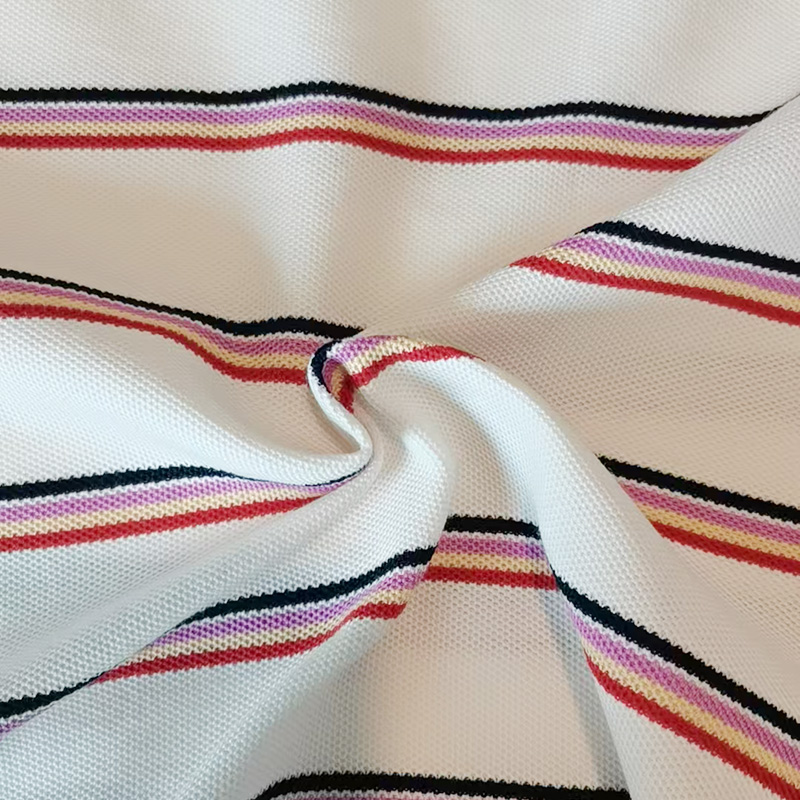
The defining characteristic of this textile lies in its unique geometric knitting process. Unlike standard flat knits, it is created using a specific tuck stitch attachment on a circular knitting machine. This specialized manufacturing process yields a raised, textured surface that typically resembles a waffle or honeycomb knit fabric pattern.
Furthermore, this three-dimensional weave is inherently functional. The interlocking yarns create microscopic pockets of air within the material. These air pockets facilitate superior mechanical airflow, allowing trapped body heat to escape while drawing cooler ambient air inward. Because the textured surface area is significantly larger than that of a flat fabric, it dramatically accelerates moisture evaporation. This precise structural engineering makes the material highly efficient at managing perspiration during extended, demanding wear.
Historically and commercially, this textured weave has maintained its position as the premier choice for collared shirts. From a practical standpoint, the uneven surface excels at masking sweat stains. This is a critical requirement for both high-intensity athletic environments and high-stakes corporate settings.
Beyond aesthetics, this specific weaving technique delivers remarkable structural integrity. The interlocking geometric pattern provides a high degree of dimensional stability. When you stretch a premium swatch diagonally across a cutting table, it should snap back to its original grid shape almost instantly. Consequently, the resulting garment resists stretching out of shape, avoids clinging uncomfortably to the body, and allows collars to remain crisp even after dozens of industrial washing cycles.
When developing a new apparel line, procurement teams often weigh the benefits of a textured mesh against a standard jersey knit. While both are ubiquitous in the garment industry, their distinct physical properties dictate entirely different end-use applications.
The most immediate difference is visual and tactile. A textured mesh features a structured matte finish. The raised pattern gives the garment a heavier and more substantial hand-feel, which consumers subconsciously associate with premium quality and professional attire. In contrast, jersey knit offers a smooth, flat surface with a soft drape and a slight natural sheen. It feels lighter and aligns more closely with standard relaxed t-shirt materials.
Even when manufactured from identical raw materials, their breathability profiles diverge sharply. The open-weave structure promotes active ventilation, making it vastly superior for warm climates, outdoor labor, and active environments. Imagine a landscaping crew working under the July sun. A jersey shirt will quickly saturate and cling to the skin. Conversely, a structured mesh offers vital ventilation. Jersey knit tends to trap heat more readily unless it is specifically engineered with moisture-wicking synthetic fibers.
Selecting between these two options requires aligning the textile with your brand demographic and pricing strategy.
Feature | Structured Mesh | Jersey Knit |
|---|---|---|
Surface Texture | Waffle or honeycomb, highly textured | Smooth and flat |
Drape & Structure | High structure, crisp drape | Soft, relaxed drape |
Breathability | Excellent due to engineered air pockets | Moderate, highly dependent on the blend |
Ideal Use Cases | Golf apparel, corporate uniforms, high-end fashion | Casual streetwear, promotional apparel, budget lines |
When your procurement team receives a swatch, an immediate visual check is never enough. You need empirical data. Evaluating premium pique mesh fabric requires standardized metrics to ensure the material meets commercial quality thresholds on the factory floor.
Density, measured in Grams per Square Meter, is the global standard for evaluating textiles. Selecting the correct density is vital for balancing wearer comfort with garment longevity. A lightweight variant ranging from 150 to 170 Grams per Square Meter is best suited for high-performance athletic wear. The industry standard sits between 180 and 220 Grams per Square Meter. This mid-weight range offers optimal opacity, excellent drape, and year-round comfort. Additionally, procurement engineers must verify the roll width. A standard usable width of 160 centimeters to 170 centimeters ensures optimal marker efficiency during the cutting process, significantly reducing fabric waste.
Dimensional instability is a notorious failure point in poorly manufactured knits. Buyers must demand shrinkage testing data measured via ISO standard wash tests. For high-quality pre-shrunk cotton, acceptable shrinkage rates should remain strictly under five percent. To achieve this tight tolerance, reputable mills utilize heavy-duty compacting machines during the finishing process to stabilize the yarn long before it reaches the cutting table.
Pilling occurs when short fibers break and tangle on the surface, creating unsightly fuzz balls. This is particularly problematic in cheaper polyester and cotton blends. Procurement officers should mandate Martindale or Box Pilling test results, aiming for a grade of 4 or 5 on a standard 5-point scale.
Similarly, colorfastness to washing and UV light exposure must be strictly verified. A uniform that fades from navy blue to a dusty purple after three washes will instantly destroy brand equity. Ensure the supplier provides testing reports confirming that the dyes are chemically stable and will not bleed into wash water.
The raw fiber composition dictates the unit cost, performance characteristics, and care requirements of the final product. Brands are recognizing that while pure cotton boasts heritage appeal, the modern consumer expects advanced moisture management capabilities.
For luxury and premium retail brands, pure combed cotton remains the gold standard. The intensive combing process removes short, uneven fibers and impurities, leaving only long, smooth yarns. This composition offers ultimate breathability, an exceptionally soft hand-feel, and natural hypoallergenic properties. However, from a procurement standpoint, it is the most expensive option. Pure cotton is also more prone to slight wrinkling and has a higher potential for shrinkage if not aggressively finished at the mill.
Blending polyester with cotton is the most widespread strategy for B2B buyers seeking to balance premium quality with strict cost-efficiency. Chief Value Cotton retains a soft, natural feel because cotton is the majority fiber. Meanwhile, the polyester framework adds tensile strength, wrinkle resistance, and superior color retention. This is widely considered the optimal blend for high-quality corporate uniforms. Conversely, blends dominated by polyester are highly durable, quick-drying, and aggressively cost-effective. Yet, they sacrifice noticeable breathability and are more prone to surface pilling over time.
The activewear market demands dynamic mobility. By integrating a small percentage of Spandex or elastane into the weave, manufacturers create a highly resilient stretch variant. For brands looking to develop advanced activewear lines, sourcing a specialized polo shirt fabric treated for rapid moisture evaporation can significantly elevate the thermal regulation properties of the final garment. These performance blends often utilize specialized cross-section polyester yarns that physically pull moisture away from the skin.
B2B buyers frequently purchase blank garments intended for secondary customization, such as adding corporate logos or team crests. The physical texture heavily influences which embellishment methods will yield professional, long-lasting results.
Textured mesh is universally recognized as the ultimate canvas for commercial embroidery. Picture a dense corporate crest requiring ten thousand stitches. On a flimsy, flat jersey, the heavy logo will pucker, distort, and drag the neckline down. On a structured mesh, the interlocking geometric weave acts as a stabilizing grid. It holds thousands of stitches securely without tearing or distorting the surrounding material. The raised texture also complements the three-dimensional nature of embroidery thread, resulting in a cohesive premium finish.
Conversely, traditional screen printing on a waffled surface can be a logistical headache. The uneven peaks and valleys prevent the printing squeegee from laying down a perfectly flat layer of ink. This often results in tiny, frustrating gaps in the printed design where the ink failed to reach the deeper recesses of the texture.
To circumvent this, buyers have several practical options. First, source a micro-knit variant which features a much smaller and tighter geometric pattern, providing a smoother surface for ink adherence. Second, work exclusively with printers who utilize specialized high-density plastisol inks or water-based discharge inks that penetrate the fibers deeply. Finally, utilize modern Direct-to-Film transfers. A printed film is applied via heat press, effectively bridging the microscopic gaps in the texture to deliver a solid, vibrant logo.
Identifying the perfect material is only half the battle. Securing a reliable manufacturing partner ensures consistent dye lots, timely delivery, and strict compliance with international trade standards.
Modern consumers and corporate clients increasingly demand supply chain transparency. When vetting potential mills, procurement managers should prioritize facilities that hold recognized global certifications. OEKO-TEX Standard 100 ensures the material has been tested for harmful substances. If you are marketing organic lines, the Global Organic Textile Standard is non-negotiable. For brands utilizing recycled polyester to meet sustainability targets, the Global Recycled Standard is a mandatory checkpoint.
Minimum Order Quantities significantly impact your inventory risk and corporate cash flow. Standard stock-color rolls generally offer low minimums. However, if your brand requires custom Pantone dyeing to match exact corporate branding guidelines, suppliers will typically require higher minimums, often ranging from 300 to 500 kilograms per color, to justify the industrial vat dyeing process. Buyers must negotiate these terms upfront and accurately factor in lead times, which can range from twenty to forty-five days for custom production runs.
Never commit to a bulk purchase without conducting rigorous in-house testing on physical swatches. Upon receiving sample yardage, independently verify the density using a precision fabric weight scale. Conduct a standard hot wash test to measure shrinkage and color bleeding, and critically assess the hand-feel against your target demographic expectations.
Yes, shrinkage is a distinct possibility, but it depends entirely on the material blend and the mill manufacturing process. If the garment is pure cotton and has not undergone a commercial pre-shrinking treatment, it can shrink up to eight percent after the first hot wash and dry cycle. However, high-quality B2B suppliers typically pre-shrink their cotton, reducing this rate to an acceptable three to five percent. To further mitigate shrinkage risks, apparel buyers often opt for polyester and cotton blends. The synthetic fibers provide structural stability that prevents the cotton from contracting significantly during laundering.
While the terms are frequently used interchangeably on the factory floor, they are not exactly the same. The broader category refers to double-knit weaving styles that create a textured, raised surface. Honeycomb refers to one specific geometric pattern within that broader family. A honeycomb knit features distinct, recessed hexagonal shapes that resemble a bee nest. Other variations include waffle knits, bird-eye knits, and micro-knits.
Absolutely. It is engineered specifically for warm climates and high-movement environments. The three-dimensional geometric knit creates micro-pockets of air between the garment and the wearer skin. This structure facilitates exceptional airflow, allowing trapped body heat to escape rapidly while cool air circulates. Furthermore, the textured surface area is larger than that of flat-knit materials, which accelerates the evaporation of sweat. This inherent mechanical breathability is exactly why it remains the undisputed standard for summer golf apparel, tennis uniforms, and warm-weather corporate wear.
For corporate uniforms that require a delicate balance of professional appearance, daily longevity, and budget-friendliness, a Chief Value Cotton blend is the most cost-effective solution. Typically composed of sixty percent cotton and forty percent polyester, this blend offers the breathable comfort of natural cotton alongside the industrial durability and wrinkle resistance of synthetic polyester. It withstands frequent heavy-duty washing without losing its tailored shape or fading rapidly. Blends with higher polyester content might look cheaper on a spreadsheet, but they often feel overly synthetic and trap body heat, making cotton-rich blends the optimal long-term investment.
Compared to standard flat woven fabrics, it is highly resistant to wrinkling. The three-dimensional knit structure provides inherent memory and elasticity. Blends that incorporate polyester or a small percentage of spandex offer the highest level of wrinkle resistance, often requiring zero ironing straight out of the dryer. Pure cotton variants may show slight creasing if left crumpled, but they generally smooth out quickly once worn, making this textile ideal for travel and active daily wear.
The primary difference lies in the scale of the geometric knit pattern. Standard variations feature a visible, pronounced waffle or honeycomb texture that offers a classic, slightly heavier drape. Micro knit utilizes a much finer gauge needle during the knitting process, resulting in a significantly smaller, tighter, and smoother texture. Micro variants are often lighter in weight, provide a sleeker modern aesthetic, and are vastly superior for detailed screen printing or delicate heat transfers.
Selecting the right material requires a careful balancing act between fabric density, engineered fiber blends, and your operational budget. High-quality materials directly reduce return rates, simplify the customization process, and drastically increase long-term customer brand loyalty. Do not leave your product quality to chance. We highly recommend consulting with experienced textile engineers to find the exact specifications your brand requires. Explore the comprehensive catalog of high-performance knits and request physical swatches directly at ypfabrics.com to secure the perfect foundation for your next apparel launch.