Views: 0 Author: Site Editor Publish Time: 2026-09-04 Origin: Site
Wet processing represents the highest-risk phase in modern apparel manufacturing. Incorrect handling during this critical stage permanently damages the elasticity, dimensional stability, and hand-feel of delicate knits. We must transition our focus from textbook definitions to harsh commercial reality. Today's buyers must meticulously align their knitted fabric dyeing and printing choices with actual production volumes, precise fiber compositions, and strict end-use performance expectations. Selecting the right processing route requires careful strategic consideration. You need to balance unit costs and Minimum Order Quantities (MOQs) directly against structural integrity and strict global compliance mandates. Without this essential balance, your production run faces severe quality delays and costly waste. In this guide, you will learn how to successfully navigate these wet processing complexities. We will explore how to evaluate competing printing technologies, mitigate shrinkage risks, and audit potential dye house partners effectively.
Method dictates margin: Digital printing suits high-mix, low-volume (HMLV) orders, while rotary screen printing dominates bulk production economies.
Fiber chemistry is non-negotiable: Cotton knits require reactive dyes for longevity; polyester relies on disperse dyes.
Tension is the enemy: Processing knits requires specialized low-tension equipment (like soft-flow jet dyeing) to prevent irreversible stretching and shrinkage.
Validation requires testing: "Good quality" must be quantified via standardized color fastness and dimensional stability metrics before bulk approval.
Many sourcing teams treat wet processing as an afterthought. This oversight inevitably leads to high defect rates on the cutting room floor. You might encounter uneven shading across different fabric rolls. You may also observe severe spirality in finished t-shirts after their first wash. These defects destroy your profit margins. They also damage long-term brand reputation.
A successful production run demands proactive planning. You must align your chosen fabric dyeing process with three distinct commercial pillars to ensure viability.
Cost vs. Yield: Buyers must understand the breakdown of their production expenses. Setup costs include engraving screens or metal cylinders. Variable costs encompass ink, dye, water, and energy. High setup costs demand larger orders to amortize the expense.
Scalability & MOQs: You must match the technology directly to your order size. Running a 500-meter micro-collection requires completely different machinery than executing a 50,000-meter bulk program. Choosing the wrong method drastically inflates your unit price.
Compliance & Sustainability: Global markets enforce strict chemical restrictions. Your dye house must meet standards like REACH in Europe. They should also carry OEKO-TEX® Standard 100 certifications. Failing these compliance checks blocks your goods at customs.
Common Mistake: Brands often push for the lowest per-meter dye cost. They ignore the subsequent fabric fallout caused by tension damage. A cheaper dye house often utilizes outdated machinery. This results in higher hidden costs during garment assembly.
Unlike rigid wovens, knit structures possess inherent elasticity. They stretch easily under mechanical tension. Therefore, commercial solution categories must prioritize low-tension handling at all times. Applying too much force elongates the loops permanently.
Exhaust dyeing remains the industry standard for knits. The fabric circulates in a continuous rope-like loop through a specialized dye bath. The dye gradually moves from the water into the fiber over several hours.
When evaluating dye houses, you must inspect their specific machinery. Soft-flow jet machines represent the gold standard here. These machines use a gentle stream of water to transport the fabric loop. This fluid transport reduces surface abrasion significantly. It also prevents the structural elongation commonly seen in older winch methods. Older winch machines physically drag the wet fabric over a mechanical reel. This dragging creates immense tension and causes severe shrinkage later.
You cannot dye all fibers using the same chemicals. The chemistry must match the molecular structure of the yarn perfectly.
Cellulosics (Cotton, Viscose, Modal): These plant-based fibers require reactive dyes. Reactive dyes form a permanent chemical bond with the cellulose molecules. This bond delivers exceptionally high wash fastness and vibrant, bright shades.
Synthetics (Polyester): Polyester repels water naturally. It requires disperse dyes applied at exceedingly high temperatures (around 130°C). The dye vat must remain under high pressure to force the color into the synthetic polymer.
Blends (Cotton/Spandex or Cotton/Polyester): Blends introduce significant complexities. Dyeing a cotton and polyester blend often requires a two-step double-dyeing process. The facility dyes the polyester first. They wash the fabric, then dye the cotton. This doubles your processing time. It also increases water usage and overall costs.
Best Practice: Always specify your exact fiber blend before requesting a quote. A seemingly minor addition of 5% spandex alters the required dyeing temperature and tension parameters entirely.
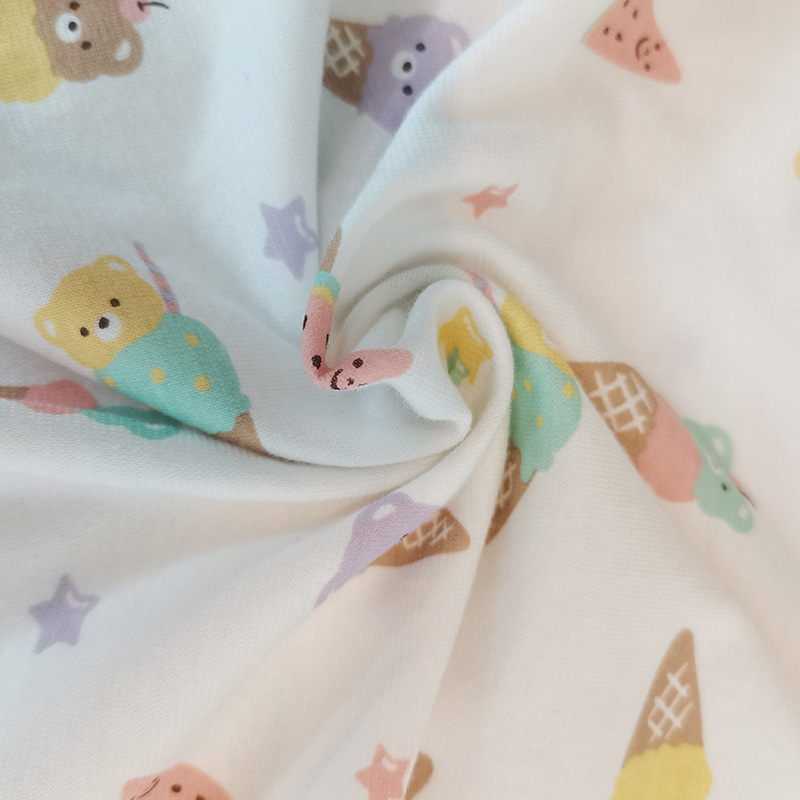
Printing adds localized patterns to your garments. You must compare available printing methods based on design complexity, required hand-feel, and basic economics. The right choice depends entirely on your specific end-use application.
This method utilizes seamless, perforated metal cylinders. Each cylinder applies one specific color to the fabric as it rolls past. Rotary screen printing handles simple to medium complexity designs exceptionally well.
It carries high initial setup costs. You must pay to engrave a separate screen for every color in your pattern. However, it offers the absolute lowest cost per meter at scale. It remains the dominant choice for high-volume, continuous production runs.
This technology operates much like a giant office inkjet printer. It deposits microscopic droplets of ink directly onto the textile. Digital fabric printing easily handles photorealistic designs. It allows for limitless colors within a single pattern.
The primary advantage is flexibility. You face low or zero MOQs. You skip all screen engraving fees. However, you must accept slower production speeds. You also face much higher variable ink costs per meter. This makes digital printing ideal for rapid-response fashion models rather than basic commodity apparel.
The type of ink used determines the physical characteristics of the final garment.
Reactive printing actually integrates with the fiber core. It yields zero hand-feel, offering the softest possible touch. The wash fastness remains excellent over years of use. However, the process requires extensive post-washing to remove unfixed dyes. This step drastically increases water usage and total production cost.
Pigment printing takes a different approach. The ink sits completely on the fabric surface, bound by synthetic resins. It remains cheaper and much faster. It acts as an eco-friendly alternative because it requires zero post-washing. Unfortunately, the surface resin can compromise the soft drape of knits. Pigment prints also suffer from lower rubbing fastness compared to reactive alternatives.
Comparison of Knitted Fabric Printing Technologies
Feature | Rotary Screen Printing | Digital Fabric Printing |
|---|---|---|
Best Use Case | Bulk orders, simple/medium patterns | Micro-runs, photorealistic designs |
Setup Cost | High (Screen engraving required) | Zero (Direct from digital file) |
Variable Cost | Low per meter | High (Expensive specialized inks) |
Color Limitations | Limited by number of screens (usually 8-12) | Limitless |
Knowing what can go wrong during wet processing helps you implement proper controls. You must monitor dimensional stability and color retention relentlessly.
Heat and mechanical pulling naturally cause wet knits to stretch. If a factory dries the fabric in this stretched state, the garment will shrink violently during the consumer's first home wash. To prevent this, facilities must use a stenter frame.
During the stenter drying process, operators must employ "overfeeding". They deliberately feed more fabric onto the machine's holding pins than the machine's actual running speed dictates. This mechanical action forces the loops to compress back together. Overfeeding locks in the intended shape and neutralizes residual shrinkage before the fabric is cut.
The industry must move away from subjective visual approvals. You must specify exact testing requirements to guarantee color fastness.
Wash fastness (ISO 105-C06): Measures how much dye bleeds into the wash water and stains other garments.
Rubbing/Crocking fastness: Measures color transfer when the fabric rubs against another surface. You must test this in both wet and dry conditions.
Light fastness: Measures fading under UV exposure. This metric remains absolutely crucial for activewear, outdoor apparel, and swimwear.
Commercial color matching relies on objective data. Spectrophotometers measure the exact color difference between your approved standard and the factory bulk run. This difference is called the Delta E (ΔE) value. Establishing an acceptable tolerance with your dye house prevents disputes. Usually, a strict commercial standard requires a ΔE value of less than 1.0. Anything above this threshold becomes visible to the naked human eye.
Apparel sourcing teams need a reliable vendor evaluation framework. You should perform these actionable auditing steps before assigning any bulk production.
Walk the factory floor. Do they utilize tensionless handling systems specifically calibrated for knits? Look for open-width compactors. A compactor acts like a giant industrial iron. It uses steam and mechanical pressure to pre-shrink the knit fabric gently. If the facility only uses machinery designed for woven cotton, they will destroy your knit yardage.
A competent facility must generate accurate lab dips and print strike-offs rapidly. Inspect their internal laboratory. Do they possess modern spectrophotometers? An advanced in-house lab proves they manage recipe formulation scientifically rather than relying on guesswork. This internal capability reduces standard approval times from weeks to days.
Wet processing generates massive amounts of toxic wastewater. You must verify that the partner operates a functional Effluent Treatment Plant (ETP). Check their discharge logs. A robust ETP mitigates critical supply chain ESG (Environmental, Social, and Governance) risks. It also ensures regulatory continuity. Governments frequently shut down non-compliant dye houses without warning, which will instantly paralyze your supply chain.
The choice between reactive versus pigment inks, or digital versus rotary machinery, fundamentally alters an apparel brand's unit economics. These decisions directly impact product quality, longevity, and overall market positioning. Treating wet processing as a highly engineered phase rather than a basic commodity service protects your margins. It also ensures consistent consumer satisfaction.
To implement a robust sourcing strategy, take the following next steps:
Lock in your exact fiber composition and calculate your realistic MOQs before approaching any facility.
Request physical strike-offs and lab dips for visual and instrumental approval prior to cutting.
Demand independent third-party testing for dimensional shrinkage and fastness metrics before issuing your final bulk purchase order.
Audit potential partners specifically for low-tension handling equipment and compliant wastewater treatment.
A: The most cost-effective method depends entirely on your volume threshold. For bulk production exceeding 3,000 meters, pigment rotary screen printing remains the cheapest option due to fast speeds and no post-washing requirements. However, for micro-runs or samples under 500 meters, digital printing is more cost-effective because it eliminates expensive screen engraving setup fees.
A: Knits shrink because of residual tension accumulated during wet processing. As the wet fabric moves through dye baths, it stretches longitudinally. If the factory does not use mechanical compacting and stenter overfeeding to relax the fibers back to their natural state during drying, the fabric will snap back and shrink heavily during the consumer's first home wash.
A: Yes, you can print digitally on highly elastic knits. However, the factory must use specialized sticky-belt digital printers. The belt temporarily glues the fabric flat during the printing phase. This prevents the stretchy athletic material from shifting, curling, or distorting while the print heads deposit the ink.
A: Reactive dyeing is a solid, all-over immersion process. The entire fabric rope submerges into a vat, taking on one uniform color completely. Reactive printing applies the exact same chemical dye class, but uses screens or digital heads to place the color selectively. This localized application creates specific patterns, motifs, or graphics on an otherwise blank fabric.