

Views: 0 Author: Site Editor Publish Time: 2026-03-13 Origin: Site
Hot weather, crowded commutes, long workdays, and high-output workouts all create the same problem for clothing: heat and moisture build up faster than they can escape. When that happens, even a well-designed garment can feel heavy, sticky, and distracting. Over the years, we’ve seen customers move from “just choose a thinner fabric” to a much more practical question: How can fabric actively help the body stay comfortable? That shift is exactly why cool fabric technology has become a key topic for apparel brands, product developers, and sourcing teams. Cool fabric is not only a marketing phrase. When engineered correctly, it’s a combination of fiber choices, yarn structures, knitting methods, and finishing processes that help clothing breathe better, move moisture more efficiently, and reduce the uncomfortable sensation of overheating.
From our perspective at Zhucheng YOUPIN Knitting Co., Ltd., cool fabric development is about measurable comfort—how air moves through the fabric, how sweat spreads and evaporates, how the surface feels on skin, and how stable the performance remains after washing. In this article, we’ll explain how cool fabric technology works, what makes it breathable, and how it improves comfort in real wear scenarios—whether for sportswear, outdoor clothing, uniforms, or everyday summer apparel.
Cool fabric refers to textiles engineered to help the body feel cooler by improving one or more of these functions:
Breathability: allowing air exchange through the fabric
Moisture management: moving sweat away from the skin and speeding evaporation
Heat transfer: reducing heat retention and improving thermal comfort
Skin comfort: reducing cling, stickiness, and friction
Different products achieve this in different ways. Some rely mainly on yarn and knit structure. Others add finishing technologies such as moisture-wicking treatments or cooling mineral additives. The best solutions often combine both “structure” and “finish” so performance is durable.
Breathability is often described casually, but in real wear it comes down to one practical question: how easily can warm, humid air escape from inside the garment? When trapped heat and moisture can’t move out, the microclimate between skin and fabric becomes hot and sticky—so you feel uncomfortable even if the fabric looks “light.” That’s why cool fabric engineering focuses on improving airflow and moisture release through three key controls: porosity (the micro-openings created by yarn and knit structure), air permeability (how readily air can pass through those openings), and moisture vapor transfer (how quickly humidity migrates outward instead of staying against the skin).
Comfort follows a simple chain: your body generates heat and sweat, the fabric must absorb or transport that moisture, the moisture must evaporate efficiently, and evaporation removes heat—leaving you feeling cooler and drier. Cool fabric technology is designed to strengthen the most important middle links, especially moisture movement and evaporation speed.
One of the most important cool fabric functions is wicking. Wicking means sweat is pulled away from the skin and spread across a larger surface area, so it can evaporate faster.
using fibers with engineered cross-sections (more surface area)
combining hydrophobic and hydrophilic behavior in yarn design
creating capillary channels through yarn twisting and knitting
When sweat spreads, the fabric dries faster and the skin feels less sticky.
Where this matters most
activewear and gym apparel
summer polo shirts
workwear where the wearer moves all day
base layers worn under uniforms
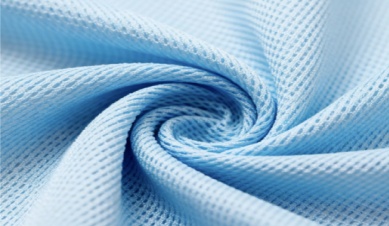
Not all “cool fabric” is about fibers. Knitting structure can be a major factor in breathability.
Common knit strategies include:
micro-mesh zones
pique structures
engineered ventilation panels
lighter loop density in heat zones
Even if two fabrics use the same yarn, the one with better structure can feel more breathable.
Knit approach | What it improves | Typical use cases |
Mesh or micro-mesh | high airflow + fast dry | sports tees, training tops |
Pique knit | airflow + texture (less cling) | polos, casual summerwear |
Single jersey (optimized) | soft touch + balanced breathability | base layers, daily tees |
Zoned knitting | ventilation where needed | performance wear, uniforms |
Some cool fabric products use finishes to enhance moisture movement or improve hand feel. The goal is often to reduce “wet cling” and improve the dry sensation after sweating.
Examples include:
durable moisture-wicking finishes
hydrophilic surface treatments
smoothness-enhancing finishes that reduce friction
A key point for buyers is wash durability. A finish that performs well only for a few washes is not ideal for long-term comfort garments.
Comfort is not only about initial sweat. It’s about how long you stay uncomfortable afterward.
Cool fabric technology aims to reduce:
the time the fabric stays wet
the time the wearer feels sticky
the risk of odor buildup due to dampness
Quick-dry is especially important for:
travel clothing
outdoor hiking apparel
daily commuting wear
uniforms that must be worn for long hours
Many people say a fabric feels “hot” when it is actually:
clinging to the skin
rubbing during movement
holding moisture at contact points
Cool fabric design often includes:
textured surfaces to reduce contact area
yarn choices that feel smoother
structures that keep the fabric slightly off the skin
This is why some breathable fabrics still feel uncomfortable—they may breathe, but they cling when damp.
A common misconception is that the coolest fabric must be the thinnest. In reality, buyers often need a balance:
enough opacity for daily wear
enough strength for washing and abrasion
enough stretch for comfort and fit stability
enough structure for shape retention
Cool fabric technology helps achieve cooling comfort without sacrificing garment quality.
Design target | Risk if overdone | How cool fabric design balances it |
Extremely open structure | see-through / low durability | engineered mesh zoning, stronger yarns |
Very light weight | poor shape retention | optimized knit + elastane balance |
Strong wicking finish | reduced softness | finish selection + soft hand processes |
High stretch | heat retention if too dense | breathable knit + controlled recovery |
From a sourcing perspective, the “best” cool fabric depends on end use.
Priorities:
high wicking
fast dry
good airflow
stable stretch recovery
Priorities:
soft touch
breathable structure
moderate wicking
good appearance and drape
Priorities:
durability
comfort during long wear
fast dry after sweating
wash stability
Priorities:
quick dry
comfort across temperature swings
packability
reduced cling
When selecting cool fabric, buyers often benefit from evaluating:
air permeability / breathability indicators
moisture wicking and drying time
hand feel (dry and after moisture)
shrinkage and dimensional stability
performance after repeated washing
A reliable supplier should be able to discuss not only the fabric name, but also the construction logic behind its performance.
In real life, comfort is not one metric. A fabric can be breathable but still feel unpleasant if it clings. It can wick well but feel rough. It can feel cool at first touch but lose performance after washing.
That’s why we see the most successful products using a system approach:
fiber/yarn engineering
knit structure design
finishing technology
durability validation
When these pieces work together, cool fabric becomes a repeatable performance material—not a one-time effect.
Cool fabric technology improves breathability and comfort by managing the full heat-and-moisture process: letting air move, pulling sweat away from skin, spreading it for faster evaporation, and reducing the sticky cling that makes garments feel hotter than they are. The best cool fabric solutions are not simply thin fabrics—they are engineered textiles that balance airflow, moisture control, skin feel, and durability so the garment stays comfortable across real wear conditions and repeated washing. At Zhucheng YOUPIN Knitting Co., Ltd., we develop and supply cool fabric options for brands and manufacturers that need practical performance for sportswear, summer apparel, uniforms, and more. If you are evaluating breathable and comfort-focused materials for your next collection, you are welcome to contact us to learn more about our cool fabric structures and application recommendations.
Cool fabric often uses engineered knit structures and yarn designs that increase airflow and improve moisture vapor transfer, helping heat and humidity escape more easily.
It improves comfort by wicking sweat away from the skin, spreading it across the fabric surface, and speeding evaporation—so the wearer feels drier and less sticky.
No. Cool fabric is widely used in summer casualwear, uniforms, travel clothing, and outdoor garments—anywhere breathability and moisture control improve wear comfort.
High-quality cool fabric performance can remain stable after washing, especially when comfort is built into yarn and knit structure. Some finishes may vary by durability, so wash testing is important.


